In short
- Pine boards cost $4 to $8 per lineal metre. Kwila is $11 to $18.
- Decking and framing above ground must be H3.2 treated if it is pine.
- Vitex and garapa bleed far less than kwila.
- Buy 10 percent more than the measured area to cover offcuts.
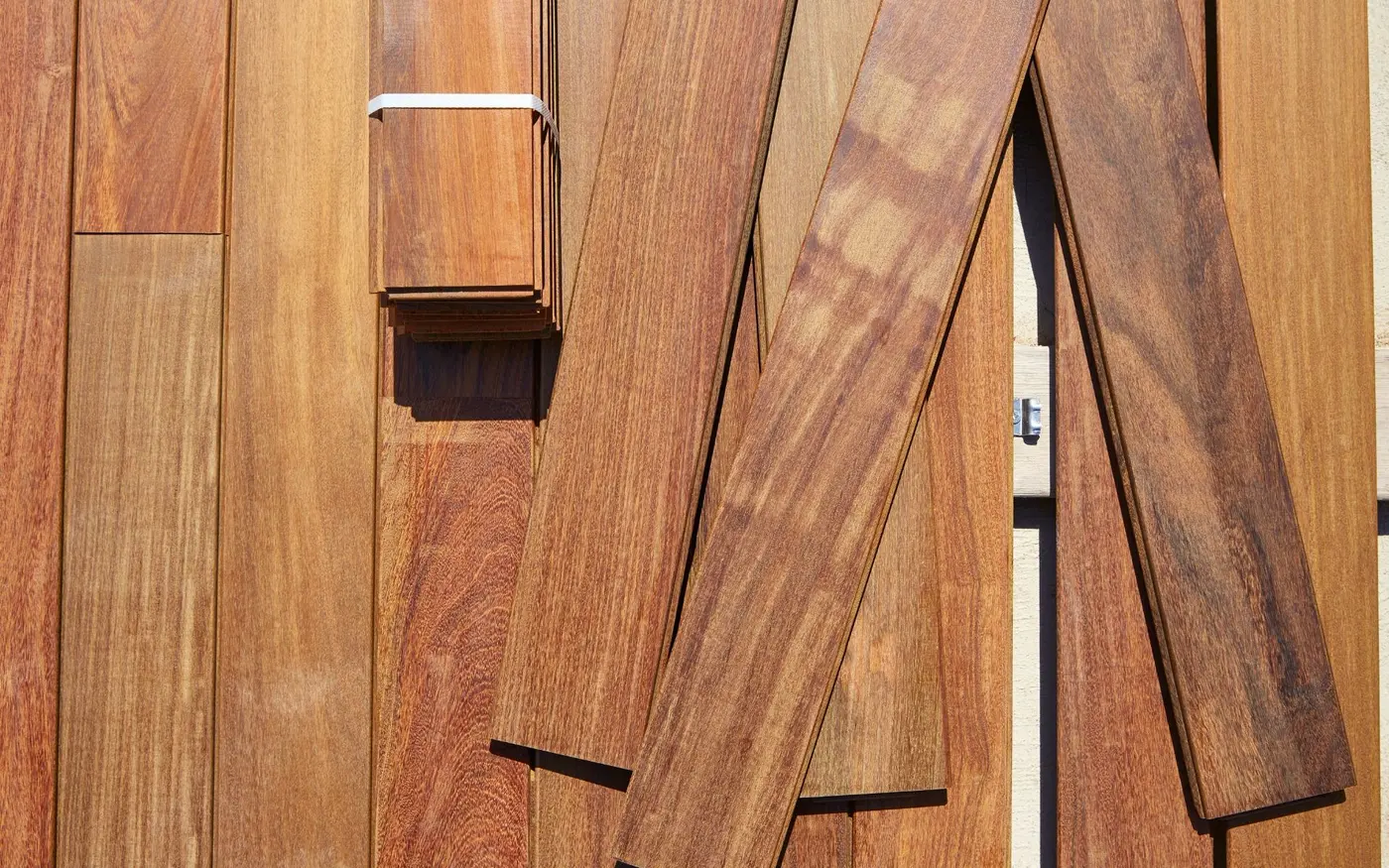
The decking timber sold in New Zealand falls into two groups: treated radiata pine, which is grown here, and imported hardwoods such as kwila, vitex and garapa. Pine is cheaper and softer. Hardwoods cost more, wear better and need no treatment. This guide compares them and explains the grades, sizes and treatment marks you will see on the rack.
Decking timbers compared
| Timber | Colour | Hardness | Notes |
|---|---|---|---|
| Treated pine | Pale green-brown, stains to any colour | Soft | Lowest price. Needs coating. |
| Kwila | Red-brown | Very hard | Bleeds tannin when new. |
| Vitex | Pale straw to light brown | Hard | Little bleed. Silvers evenly. |
| Garapa | Golden yellow-brown | Hard | Smooth, stable, fine grain. |
| Macrocarpa | Honey gold | Soft to medium | NZ grown. Heartwood only, above ground. |
Treated pine
Pine decking is radiata pine treated to hazard class H3.2, which is the level for timber exposed to the weather but not in the ground. Check the end tag or the stamp on the board. H3.1 is for painted exterior trim and is not suitable for decking.
Standard sizes are about 90 mm or 140 mm wide and 21 mm, 25 mm or 32 mm thick. Thicker boards span further between joists and feel more solid. Premium grade has fewer and smaller knots than standard grade and costs a little more. Most pine decking is grooved on one face and smooth on the other, and either can go up.
Pine is sold wet from treatment. It shrinks across its width as it dries, so boards laid tight will open up to a gap by themselves, and boards laid with a wide gap end up with a very wide one. Builders allow for it.
Kwila
Kwila is the long-standing favourite: dense, stable and a strong red-brown. It dents less than anything else on this list. Its drawback is tannin, which washes out of new boards and stains concrete and paving. The kwila cost guide covers prices and how to manage the bleed.
Vitex
Vitex comes mainly from the Solomon Islands. It is pale, fine-grained and pleasant under bare feet, and it has very little tannin. Left unoiled it turns a clean, even silver that many people prefer to oiled timber, which makes it a good choice for anyone who does not want to maintain a finish.
Garapa
Garapa is a South American hardwood with a golden colour and a smooth, tight grain. It is stable, holds oil well and stays cooler in the sun than darker timbers. It will grey like any other wood if it is not oiled.
Macrocarpa and other local timbers
Macrocarpa is a cypress grown on New Zealand farms. Its heartwood is moderately durable and has a warm honey colour. It is softer than the imported hardwoods and should only be used above ground with good airflow. Supply is patchy and sizes vary, so it suits small decks, seats and screens better than a large deck.
Timber for the frame
The frame is always treated pine, at different treatment levels for different parts:
- H5 for piles, which carry the deck and sit in the ground.
- H4 for posts in the ground, such as balustrade and fence posts.
- H3.2 for bearers, joists and anything else above ground.
Cut ends of treated timber should be sealed with a brush-on preservative, because the cut exposes wood the treatment may not have reached.
What to check when buying
- Quantity. Work out the area, then the lineal metres. With 140 mm boards, about 7 metres covers a square metre. With 90 mm boards it is about 11. Add 10 percent for waste.
- Lengths. Order lengths that match the joist layout so joins land on a joist and offcuts are small.
- Straightness. Sight down each board. A slight bow pulls straight with a screw. A twist does not.
- Fixings. Stainless steel screws for hardwood and for any deck near the coast. Hot-dip galvanised or stainless for pine.
- Source. Ask for certified hardwood and keep the paperwork.
Looking after it in a damp climate
In Hamilton and the Waikato, fog and dew keep decks wet for long stretches, and any timber grows mould in the shade. Sweep leaves off, wash the deck once or twice a year, and keep a coat of oil or stain on pine. Hardwood can be left bare, though it still needs cleaning to stay safe underfoot. The deck staining guide has the steps, and the decking types guide compares timber with composite.
What it costs
As a guide, pine decking boards are $4 to $8 per lineal metre and kwila $11 to $18, with vitex and garapa close to kwila. Built into a deck, pine runs $450 to $750 per square metre and hardwood $700 to $1,100. For a firm figure on your site, ask for a site visit and a written quote.
Common questions
What is the best decking timber in NZ?
There is no single best. Pine is the best value, kwila the hardest wearing, and vitex the easiest to live with if you want to leave the deck unoiled. The right one depends on budget, sun and how much upkeep you will do.
What treatment should decking timber be?
H3.2 for pine decking, joists and bearers above ground. H4 for posts in the ground and H5 for structural piles. Hardwoods such as kwila, vitex and garapa are naturally durable and are not treated.
Should decking go grooved side up or smooth side up?
Either. Grooves give a little more grip when the board is clean but hold dirt and are harder to coat. Many builders now lay pine smooth side up. Follow the supplier's advice for the board you buy.
How much decking timber do I need?
Multiply the deck area by about 7 for 140 mm boards or 11 for 90 mm boards to get lineal metres, then add 10 percent for offcuts and waste.