In short
- Kwila boards cost about $11 to $18 per lineal metre to buy.
- A kwila deck costs $700 to $1,100 per m² built.
- Kwila bleeds red-brown tannin for the first few weeks and stains concrete.
- Ask for certified, legally sourced timber.
Kwila is the hardwood most New Zealanders picture when they think of a timber deck: dense, red-brown and tough. As a guide, kwila decking boards cost $11 to $18 per lineal metre to buy, and a finished kwila deck costs $700 to $1,100 per square metre built, with frame, fixings and labour included. That is roughly half as much again as the same deck in treated pine.
What kwila is
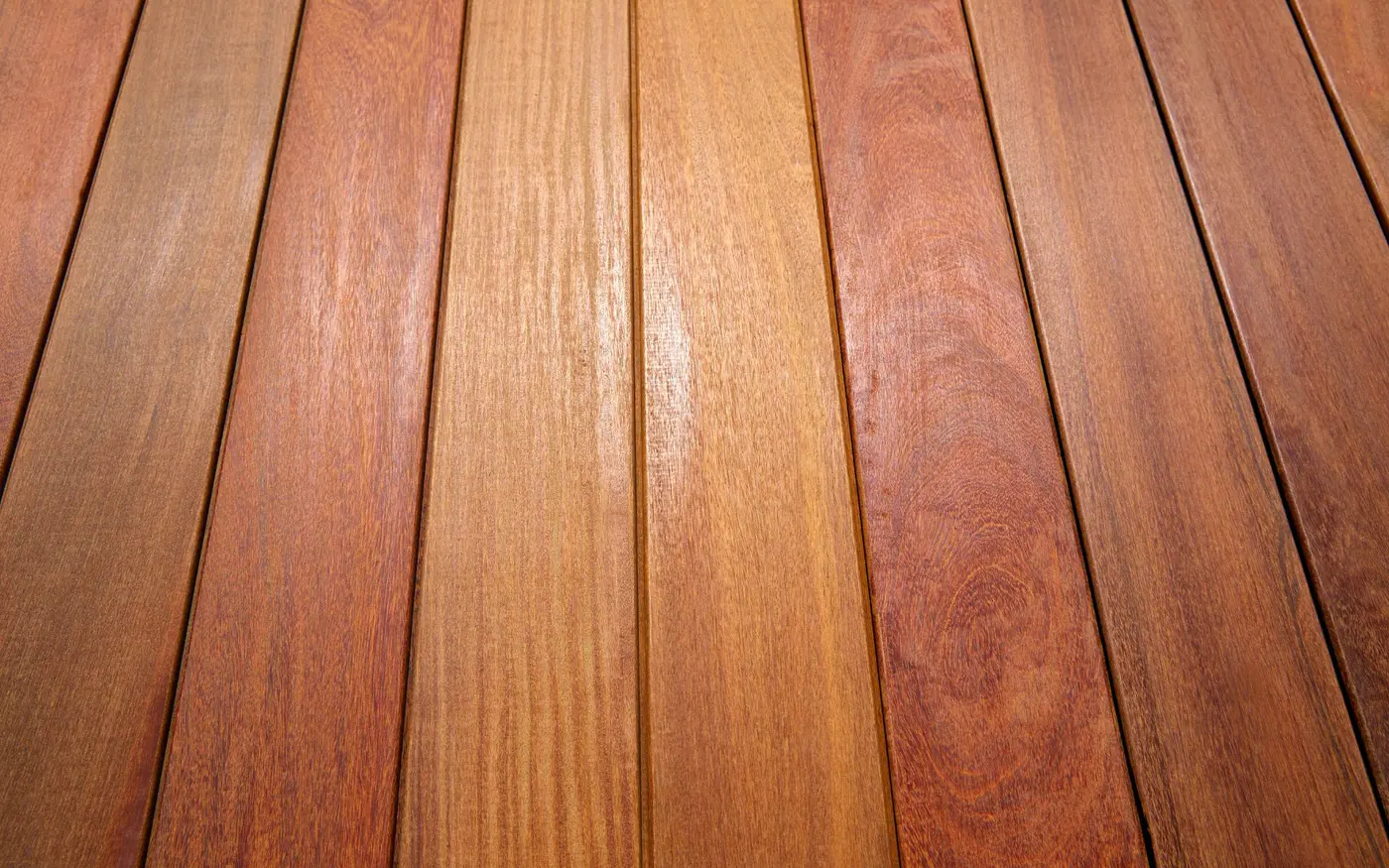
Kwila, sold overseas as merbau, comes from large tropical trees in Papua New Guinea, Indonesia and the Solomon Islands. The timber is heavy, stable and naturally durable above ground. It needs no chemical treatment for decking, it resists dents from furniture, and it shrinks and swells less than pine as the seasons change. New boards are orange-brown and darken to a deep red-brown with oil. Left bare, they weather to silver grey.
Board prices
The most common kwila decking profile is about 90 mm or 140 mm wide and 19 mm thick. Prices are quoted per lineal metre.
| Item | Guide price |
|---|---|
| Kwila decking boards, supply only | $11 to $18 per lineal metre |
| Pine decking boards, supply only | $4 to $8 per lineal metre |
| Kwila deck, built | $700 to $1,100 per m² |
| Pine deck, built | $450 to $750 per m² |
With 140 mm boards and a small gap, about 7 lineal metres covers one square metre. At $11 to $18 per metre, the boards alone come to roughly $77 to $126 per square metre before waste. Narrower 90 mm boards need more metres and more screws for the same area. Allow 10 percent extra for offcuts on a simple deck, more on one with angles.
What changes the price
- Width and grade. Wide boards and long, clear lengths cost more per metre. Shorter random lengths are cheaper and mean more joins.
- Certification. Kwila with a recognised legal-source or forest certification costs a little more than uncertified stock.
- Supply. It is imported, so the price follows shipping costs and the exchange rate.
- Fixings. Hardwood has to be pre-drilled and fixed with stainless steel screws. That is slower than nailing pine, and the screws cost more.
- The frame. Thin 19 mm hardwood boards need joists at about 450 mm, closer than thick pine boards require.
A worked example
Take a 5 metre by 4 metre deck, 20 square metres, on a flat site. At $700 to $1,100 per square metre, a kwila deck costs $14,000 to $22,000 built. The same deck in pine at $450 to $750 is $9,000 to $15,000. So choosing kwila adds about $5,000 to $7,000 at this size. If the deck is raised, add 25 to 50 percent to either figure, plus steps and balustrade. The deck cost guide breaks those extras down.
Tannin bleed
Kwila is full of natural tannin, and rain washes it out of new boards as a red-brown liquid. It stains concrete, pavers, light-coloured cladding and anything else it drips on, and the stain is hard to shift. In a damp climate like the Waikato's, most of the tannin leaches in the first four to eight weeks. Ways to deal with it:
- Hose the new deck often during the first weeks and rinse the paving below each time.
- Cover or protect concrete beneath and beside the deck while it bleeds.
- Use a deck cleaner made for tannin to speed it up before the first coat of oil.
- Think twice about kwila above a plastered wall, a pool edge or pale pavers.
Upkeep and lifespan
A kwila deck on a sound frame should last 25 years or more. To keep the red-brown colour it needs a wash and a coat of decking oil every 12 to 18 months. As a guide, a wash and re-coat by a tradesperson costs $25 to $50 per square metre. Skip the oil and nothing bad happens structurally. The boards go grey, the surface roughens a little and small surface cracks appear. The deck staining guide covers the method.
Where it comes from
Kwila grows slowly, and illegal logging has been a long-running problem in some of the countries that export it. Ask the supplier or the builder what certification the timber carries and where it was milled. If that matters to you and you cannot get a clear answer, vitex and garapa are hardwoods with fewer question marks, and plantation pine has none.
Kwila or something else?
- Vitex. Pale, close-grained hardwood from the Solomon Islands. Little tannin bleed. Silvers evenly. Similar price.
- Garapa. Golden South American hardwood. Smooth and stable. Similar price.
- Treated pine. Much cheaper, softer, and takes any stain colour.
- Composite. $800 to $1,300 per square metre built. No oiling at all.
The decking timber guide compares them in more depth.
Common questions
How much is kwila decking per metre in NZ?
As a guide, $11 to $18 per lineal metre for standard 19 mm decking boards, depending on width, grade and length. Built into a deck, allow $700 to $1,100 per square metre.
How long does kwila bleed?
Most of the tannin washes out in the first four to eight weeks of rain or hosing. Light bleeding can carry on for a few months, especially from cut ends. Protect concrete and paving below until it stops.
How long does a kwila deck last?
Twenty-five years or more above ground on a sound, well-ventilated frame. The treated pine frame underneath is usually what decides the life of the deck.
Is kwila better than pine?
It is harder, more stable and longer wearing, and it costs more. Pine is softer and needs coating to look good, but on a tight budget a well-built pine deck is a sound choice.