In short
- Treated pine is the cheapest decking at $4 to $8 per lineal metre.
- A pine deck costs $450 to $750 per m² built.
- Pine needs a coat of stain or oil every year or two to last.
- Do not save on the frame, the treatment level or the screws.
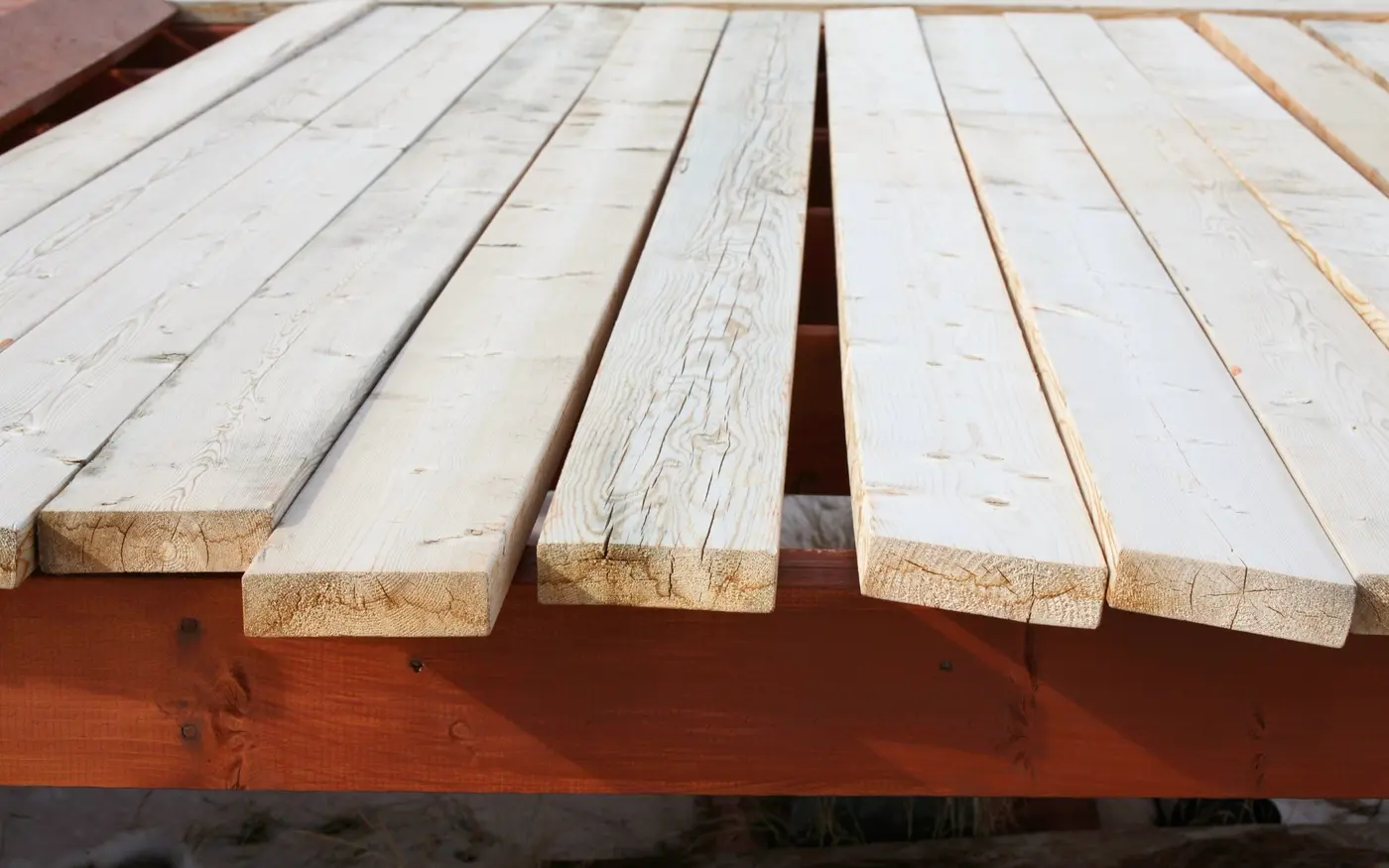
The cheapest decking timber in New Zealand is H3.2 treated radiata pine. As a guide, boards cost $4 to $8 per lineal metre, which is well under half the price of kwila at $11 to $18. Built into a deck with frame and labour, pine runs $450 to $750 per square metre. Nothing else comes close on price. The real question is how to buy and use it so the saving is still there in fifteen years.
Why pine costs so little
Radiata pine grows quickly in plantations all over the country and is milled and treated here. There is no shipping from overseas and no shortage of supply. It is also quick to build with. Pine can be nailed or screwed without pre-drilling, so labour is lower than for hardwood.
What the boards cost by area
With 140 mm wide boards, about 7 lineal metres covers a square metre. At $4 to $8 per metre, that is roughly $28 to $56 per square metre for boards. The same area in kwila is $77 to $126. On a 20 square metre deck the boards cost about $560 to $1,120 in pine and $1,540 to $2,520 in kwila, before waste.
Notice that the boards are a small share of the finished price. A 20 square metre pine deck costs $9,000 to $15,000 built. Most of that is the frame, concrete and labour, and those do not get much cheaper whatever boards you pick.
Which pine to buy
- Treatment. H3.2, every time. Read the tag.
- Grade. Standard grade has more knots and is the lowest price. Premium grade costs a little more, looks cleaner and has fewer boards you would reject. For a deck you will look at every day, premium is usually worth it.
- Thickness. Boards 32 mm thick cost more than 21 mm or 25 mm boards but span 600 mm between joists, so the frame needs fewer joists. Thin boards on wide joist spacing make a bouncy deck.
- Width. 140 mm boards cover ground faster. 90 mm boards cup less.
Other low-cost timbers
Macrocarpa
Macrocarpa heartwood is moderately durable without treatment and is sometimes offered cheaply by small local mills. Quality and sizes vary a lot. It is softer than hardwood, must be kept off the ground, and is not a safe bet for a large deck unless you know the supplier.
Eucalypt and farm-grown hardwoods
Some New Zealand-grown eucalypts are durable and make good decking. Supply is small and regional, and boards can move and check as they dry. Worth a look if a local mill has well-seasoned stock, but not a reliable budget option.
Recycled and seconds
Recycled hardwood and seconds-grade boards can be cheap. Allow far more waste, check every board for rot and old fixings, and be sure there is enough of one batch to finish the deck.
The cost over 20 years
Cheap to buy is not the same as cheap to own. Pine needs a wash and a coat of stain or oil every year or two. Do it yourself and the cost is a weekend and the price of the product. Pay for it and, as a guide, a wash and re-coat costs $25 to $50 per square metre, or $500 to $1,000 each time for a 20 square metre deck.
| 20 m² deck | Built price | Coating over 20 years |
|---|---|---|
| Treated pine | $9,000 to $15,000 | Every 1 to 2 years |
| Kwila, vitex or garapa | $14,000 to $22,000 | Every 12 to 18 months, or none if left to silver |
| Composite | $16,000 to $26,000 | None. Wash only. |
If you coat the deck yourself, pine stays well ahead on cost. If you pay someone every second year, 10 coats at $500 to $1,000 adds $5,000 to $10,000 over 20 years, and the gap to hardwood or composite closes. If you never coat it, a pine deck in a damp climate looks tired within five years and may need new boards at ten to fifteen.
Where saving money goes wrong
- Lower treatment. H3.1 or untreated timber rots outdoors. So does framing-grade timber meant for inside walls.
- Fewer piles and joists. The deck sags and bounces, and it cannot be fixed without lifting the boards.
- Cheap fixings. Plated or bright steel screws and nails rust through in a few damp winters and leave black stains.
- Building on the ground. A frame with no air under it stays wet. In the Waikato that is the quickest way to shorten a deck's life.
Real ways to spend less
- Keep the deck low so it needs no balustrade and no consent. See the consent guide.
- Design to standard board and joist lengths.
- Choose a rectangle over an L-shape or angles.
- Do the staining yourself. The staining guide shows how.
- If the old frame is sound, re-board it at $220 to $450 per square metre.
The deck cost guide has the full price breakdown, and the decking timber guide compares pine with the hardwoods.
Common questions
What is the cheapest decking timber in NZ?
H3.2 treated radiata pine. As a guide it costs $4 to $8 per lineal metre for boards and $450 to $750 per square metre for a finished deck.
How long does a pine deck last?
Fifteen to twenty-five years for the boards if they are coated regularly and the frame can dry out. Neglected pine in a damp, shaded spot can need replacing much sooner.
Is premium grade pine worth the extra?
For most house decks, yes. The price difference is small against the cost of the whole deck, and you get straighter boards with fewer large knots, which means less waste and a better finish.
Is pine decking safe around children and pets?
H3.2 treated pine is widely used in New Zealand for decks, handrails and playground structures. Wear gloves and a dust mask when cutting it, wash your hands afterward, and never burn the offcuts.