In short
- Preparation is most of the job: clean, bare, dry timber takes stain evenly.
- Coat in dry, mild weather out of direct hot sun.
- Two thin coats beat one thick one.
- Oils last 12 to 18 months, stains 2 to 3 years.
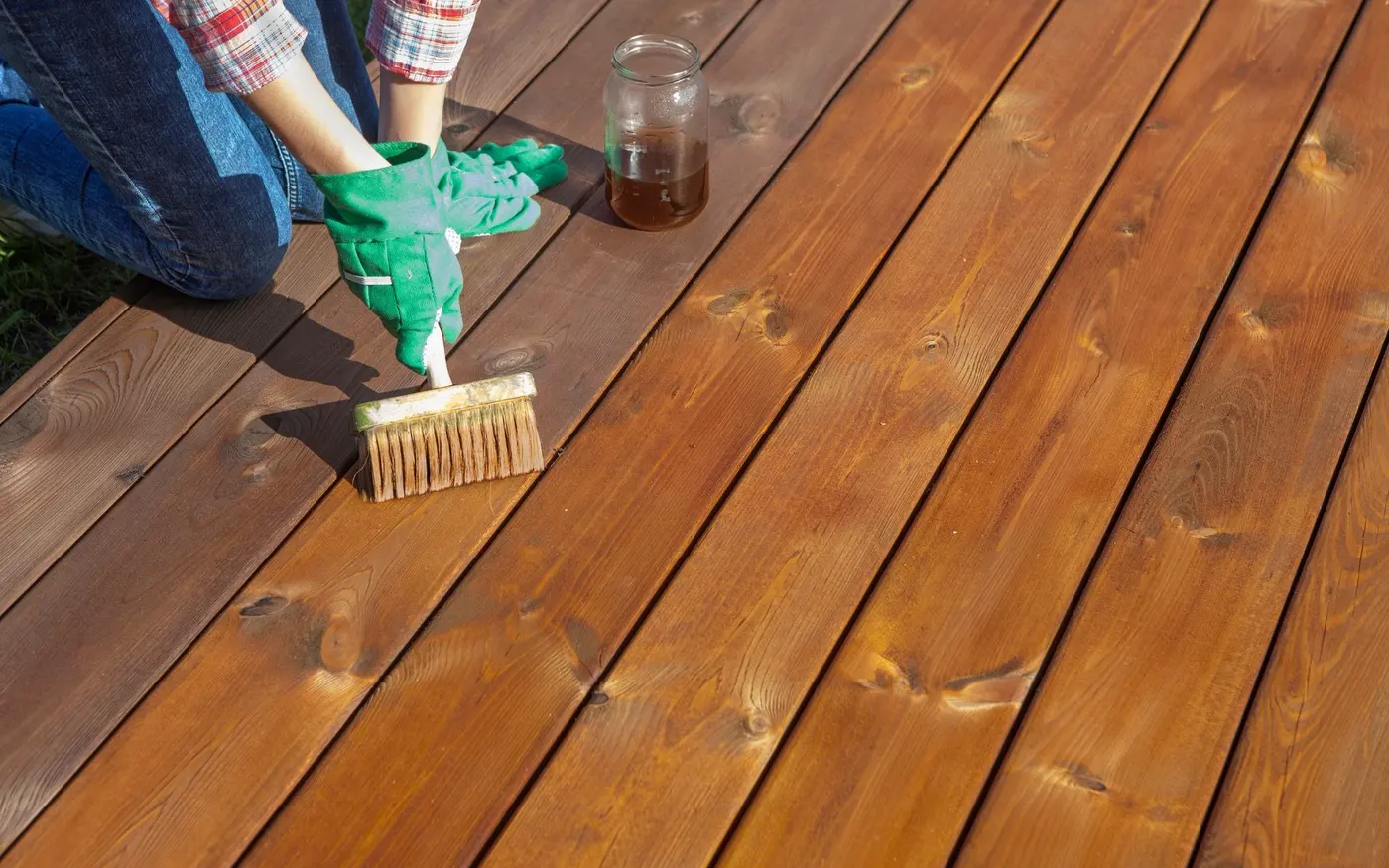
To stain a deck, wash it with a deck cleaner, let it dry for two fine days, then brush on two thin coats of stain or oil along the length of the boards, working a few boards at a time. Choose a dry, mild day with no rain due. That is the whole method. The detail below is what stops the finish peeling, going patchy or wearing off in six months.
Stain, oil or paint?
| Finish | Look | Lasts | Good to know |
|---|---|---|---|
| Decking oil | Natural timber, slightly richer | 12 to 18 months | Soaks in. Easy to redo with no stripping. |
| Semi-transparent stain | Coloured, grain still visible | 2 to 3 years | Water-based or oil-based. More pigment means more sun protection. |
| Solid stain or deck paint | Opaque colour | 3 to 5 years | Forms a film. Can peel and then needs stripping. |
Pigment is what protects timber from the sun. A clear oil keeps water out but lets the wood grey. A tinted oil or stain holds the colour for longer. Films such as paint last longest and are the hardest to redo once they fail.
Choosing a colour
- Natural and cedar tones suit pine and hide wear well.
- Browns and red-browns keep kwila looking like kwila.
- Greys give pine a weathered look from day one and go with modern houses.
- Black and charcoal look sharp, show dust and footprints, and get very hot in summer sun.
Colour charts are printed on paper, and timber is not paper. Brush a test patch on an offcut or a hidden corner and look at it dry before committing.
When to stain
- New pine. Leave it to weather for four to eight weeks so treatment moisture dries out and the surface opens up, unless the product says it can go on sooner.
- New kwila. Wait until the tannin has stopped bleeding, usually four to eight weeks, or use a tannin-removing cleaner first.
- Season. Spring and autumn are best. Aim for a day between about 10 and 25 degrees with no rain forecast for 24 hours.
- Time of day. In Hamilton and the Waikato, start once the morning dew or fog has dried off the boards and finish by mid afternoon, so the coat has cured before the evening dew settles. Avoid hot midday sun in summer. Stain that dries too fast leaves lap marks.
What you need
- Deck cleaner, and a brightener or tannin remover for hardwood
- Stiff broom or deck scrubbing brush, and a hose
- Scraper and sandpaper, 80 to 120 grit, for rough patches
- Stain or oil. Check the tin for coverage and allow for two coats.
- A wide brush or a deck applicator pad on a pole, plus a small brush for edges
- Drop sheets and tape to protect walls, paving and plants
Step 1: Clear and inspect
Take everything off the deck. Sweep it and clear the gaps between boards. Punch down or replace raised nails, tighten loose screws and replace any board that is soft or badly split. There is no point staining rotten timber. If more than a few boards are gone, look at repairs or re-boarding first.
Step 2: Clean
Wet the deck, apply deck cleaner as directed, leave it for the stated time and scrub along the grain. Rinse thoroughly. This lifts mould, dirt and the grey layer of dead wood fibre. A water blaster on a low setting with a fan tip is fine for rinsing. Used hard and close, it tears the surface of pine into fur and leaves stripes.
If the deck has an old film coating that is peeling, it has to come off with a stripper or a sander before a new finish will hold.
Step 3: Let it dry
Give it two fine, dry days. Timber that looks dry on top can still be damp inside, and stain will not soak into wet wood. Sprinkle a few drops of water on a board. If they soak in within a minute or so, it is ready. If they bead, wait longer or clean again.
Step 4: Apply the first coat
Stir the tin well and keep stirring as you go, because pigment settles. Work on two or three boards at a time along their full length, from the house outward, so you never stop in the middle of a board. Brush the stain in and wipe up puddles. Coat the board ends and the gaps you can reach. Plan your way off the deck before you start.
Step 5: Second coat
Follow the recoat time on the tin. Apply the second coat as thinly as the first. Thick coats sit on the surface, stay sticky and peel.
Step 6: Let it cure
Keep off it for 24 hours and leave furniture and pot plants off for two or three days. Lay oily rags flat outside to dry, or soak them in water, before putting them in the bin. Bunched-up rags soaked in oil can heat up and catch fire.
How often to redo it
Oils need another coat every 12 to 18 months and stains every two to three years. North-facing decks in full sun and shaded decks that stay damp both wear faster. When water stops beading and the colour looks thin in the walkways, it is time. A maintenance coat on a sound finish is a quick job: wash, dry, one coat.
If you would sooner hand it over, a wash and re-coat costs $25 to $50 per square metre as a guide. For a deck that never needs coating, see the decking types guide.
Common questions
How long should a new deck weather before staining?
Four to eight weeks for treated pine, unless the product says otherwise. Kwila should be left until the tannin stops bleeding or cleaned with a tannin remover. Always wash before the first coat.
Can I stain a deck in winter?
It is possible on a fine spell, but hard in the Waikato. Short days, fog and heavy dew leave only a few hours when boards are dry. Spring and autumn give far better results.
Do I need to sand a deck before staining?
Usually not. A proper clean is enough. Sand only where boards are rough, furred from water blasting, or where an old coating has to be removed.
Why is my deck stain peeling?
Most often because it went on too thick, on damp timber, or over an old coating that was already failing. Penetrating oils and thin stains wear away gradually and seldom peel.