In short
- A fence on the boundary is shared, so changes to it should be agreed.
- A fence wholly on your neighbour's land is theirs. Ask before touching it.
- Stain and paint can soak through gaps and mark the other side.
- Get the agreement in writing, even as a text message.
If the fence sits on the boundary, it belongs to both of you, and the safe answer is to ask your neighbour before you paint or stain your side. If the fence is entirely on their land, it is their property and you need their permission. In practice most neighbours say yes when asked. Most disputes start when nobody asks.
Who owns the fence?
Under the Fencing Act 1978, a fence on the boundary between two properties is a shared fence. Both owners are responsible for it and normally split the cost of building and repairing it. Neither owns "their side" outright.
Not every fence is on the boundary. Some were built a little inside one property, on purpose or by mistake. A fence wholly inside your neighbour's land is theirs alone, even if it is the only thing between the two gardens. A fence wholly inside your land is yours.
You usually cannot tell by looking. Clues:
- Survey pegs or boundary markers at the corners of the section.
- The title plan, which shows the legal boundary.
- Who built and paid for it. A previous owner or a long-standing neighbour may know.
The old idea that the side with the rails showing tells you who owns the fence has no legal weight in New Zealand. If it matters, a licensed cadastral surveyor can mark the boundary.
What the law says about painting it
The Fencing Act covers building and repairing fences and sharing the cost. It says nothing specific about paint. General property law fills the gap: you should not alter or damage property you do not solely own without the other owner agreeing. Painting one face of a shared fence is a change to shared property. It is unlikely to land anyone in court, but it can sour things between neighbours, and if the paint damages the fence or marks their side you could be asked to pay to put it right.
So the practical rule is simple. On a shared fence, get agreement. On their fence, get permission. On your own fence, do what you like on your side, taking care with theirs.
How to ask
- Raise it in person, then confirm by text or email so there is a record.
- Say what you want to use and what colour. Show them a sample if you have one.
- Offer to do both sides in the same product if they would like that, or to share the cost.
- Explain how you will keep it off their side.
If they rent, the owner is the one to ask. If you rent, check with your landlord first. On a cross-lease or unit title, the other owners or the body corporate may have a say.
Paint or stain, and the bleed-through problem
Paling fences have gaps, knots and splits. Thin stains and oils run through them and leave drips and dark patches on the far side, which is the most common cause of complaints.
- Stain or oil. Soaks in, shows the grain, does not peel, and is easy to redo. It is runny, so apply it with a brush or pad, not a sprayer, and go lightly near gaps.
- Paint. Sits on the surface and gives a solid colour. It can peel on rough-sawn palings and then needs scraping. Less likely to run through, more work later.
Dark colours on one side can make timber move differently from the bare side and can make palings cup. It is rarely serious, but it is a reason to keep coats thin.
Doing the job cleanly
- Pick a dry, still day. Wind carries spray and drips.
- Clean the fence with a stiff brush and a fence or deck wash, and let it dry.
- Trim plants back and cover paving and garden beds at the base.
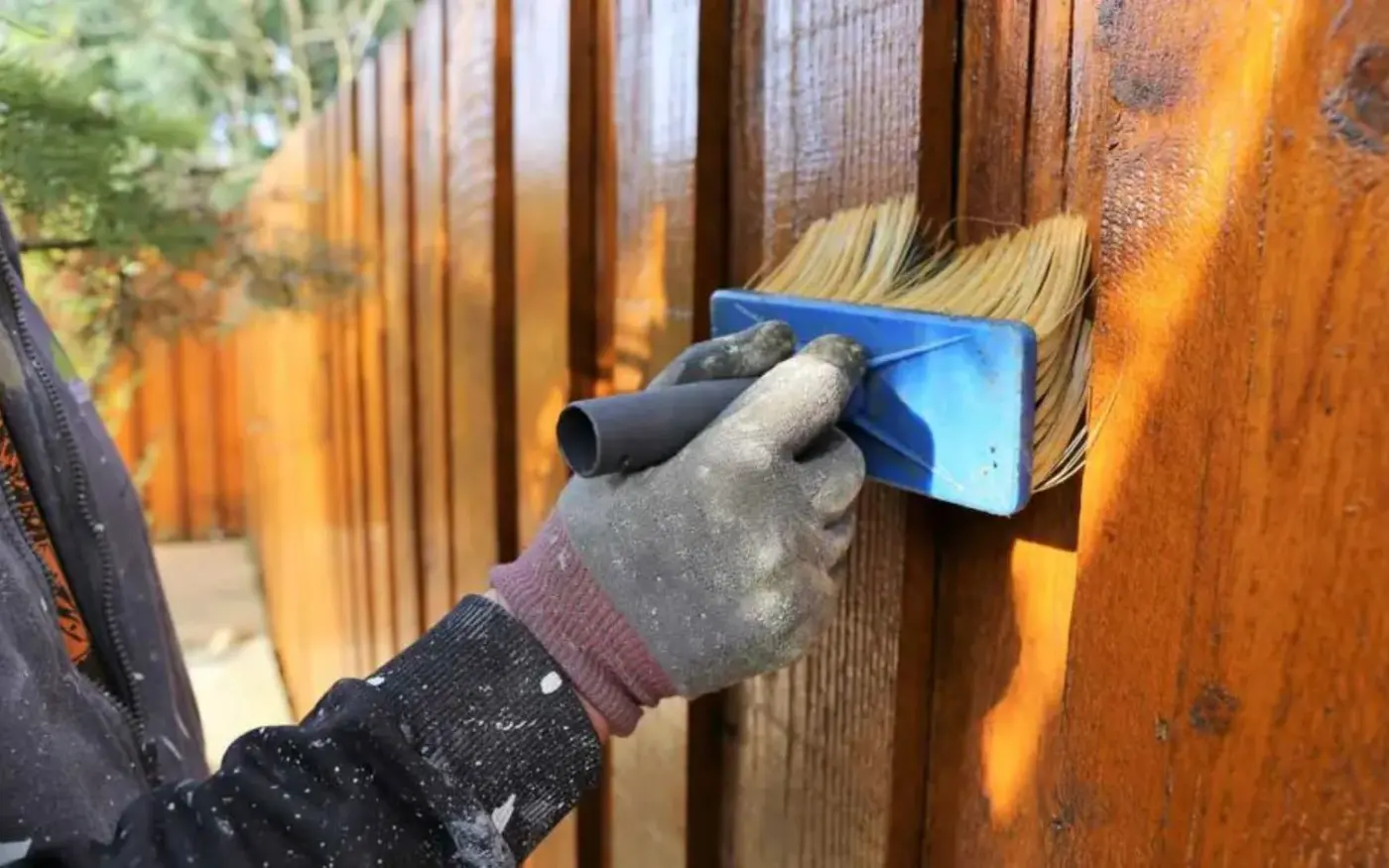
- Brush along the palings from the top down, working the product into the timber without flooding the gaps.
- Check the other side as you go, if the neighbour is happy for you to, and wipe up anything that has come through.
If they say no
You have other ways to change the look of your side without touching the fence:
- Plant in front of it: a hedge, climbers on a free-standing frame, or tall grasses.
- Put up a screen or slat panel on posts just inside your boundary.
- If the fence is worn out, propose replacing it. The Fencing Act lets you serve a fencing notice asking the neighbour to share the cost of an adequate fence, and they have 21 days to object. See the fence cost guide.
Do not fix shelves, hooks, trellis or heavy planters to a shared fence without agreement either. Extra weight and wind load can pull an old fence over.
If your neighbour paints your fence
If it is shared and they did not ask, talk to them. Usually the fix is agreeing on a colour for both sides or leaving it be. If the fence is yours alone, or their work has damaged it or marked your side and you cannot agree, the Disputes Tribunal handles claims of this size without lawyers. Community mediation services are worth trying first.
If the fence is past painting, the fences and gates page covers replacement in Hamilton and the Waikato.
Common questions
Do I need permission to paint my side of a shared fence?
There is no specific rule, but a boundary fence is shared property, so you should get your neighbour's agreement first. A quick conversation and a text to confirm avoids almost every dispute.
How do I know if the fence is on the boundary?
Look for survey pegs and check the title plan. If it is still unclear and it matters, a licensed cadastral surveyor can mark the boundary on the ground.
Will stain go through to my neighbour's side?
It can. Thin stains and oils run through gaps, knots and splits in palings. Use a brush or pad, apply thin coats, avoid spraying, and check the other side as you work.
Can I hang things on my side of the fence?
On a shared fence, ask first. Light items are seldom a problem, but trellis, shelves and heavy planters add weight and wind load that the fence was not built for.